


Product
Product
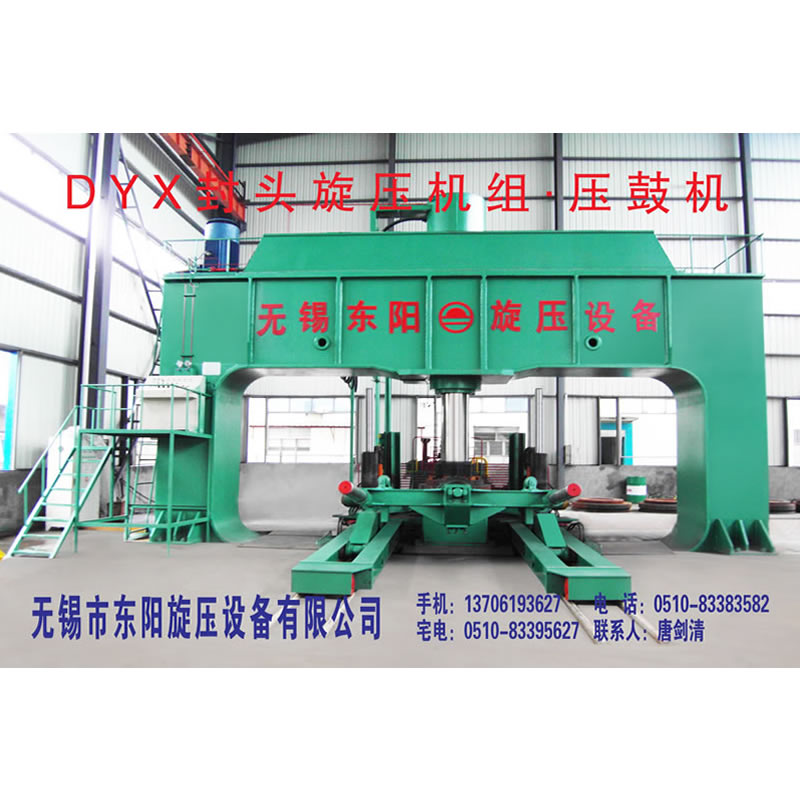
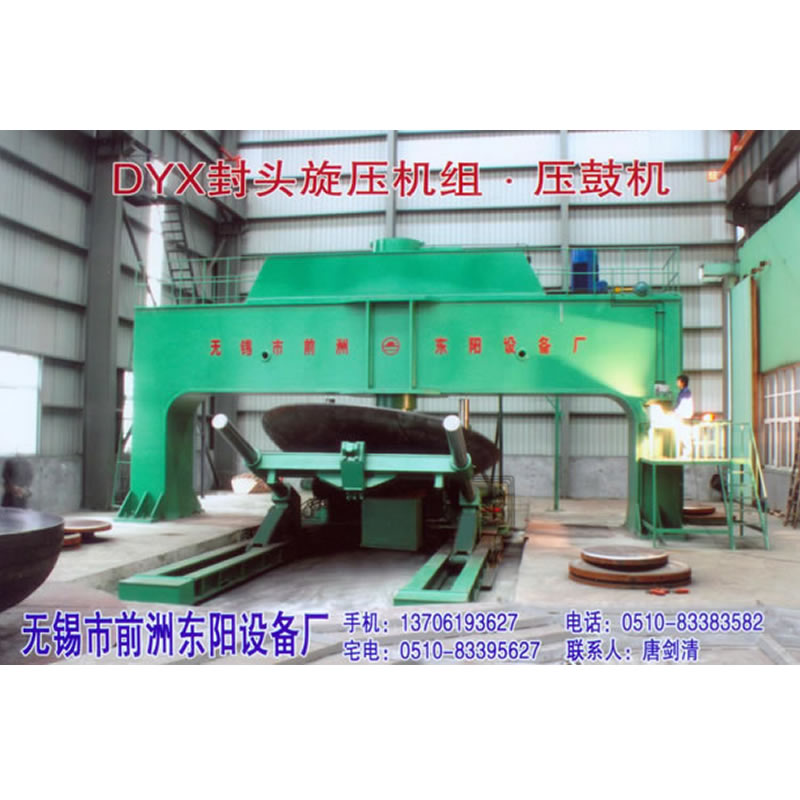
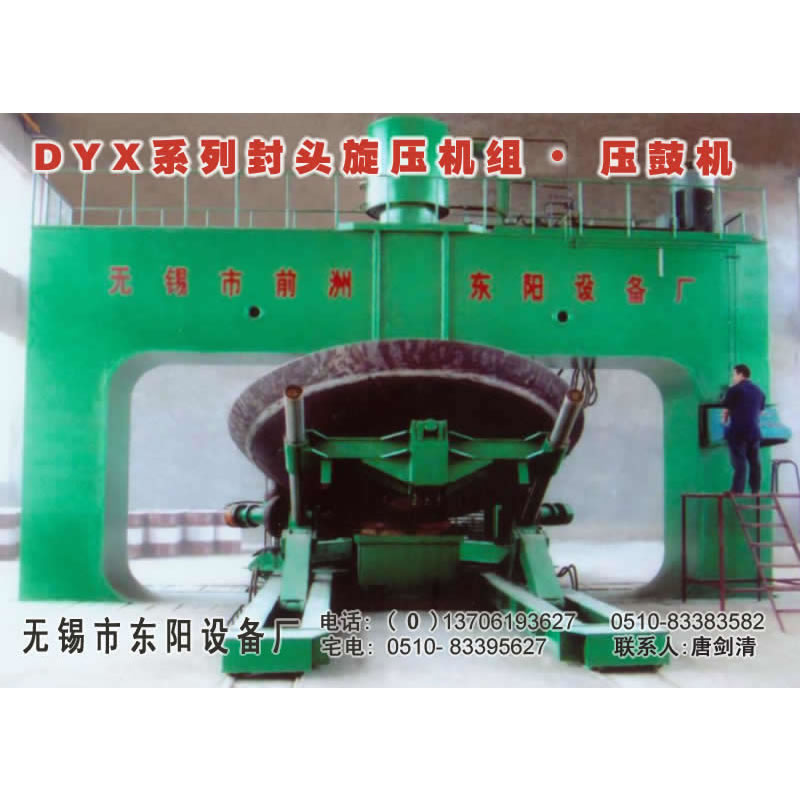
Head Flanging Machine
Product Overview
The head flanging machine is one of the core pieces of equipment in a professional head spinning production line, working together with edge-bending and edge-cutting machines to form a complete head-processing production line. This equipment comes in two configurations: the German-style T-shaped model and the Italian-style straight-line model, each precisely tailored to meet different head-specification processing needs. For small and medium-sized heads, the German-style T-shaped machine is ideal, offering convenient and natural spinning action, preventing the head from easily deviating from the center, and providing a wide processing range. For large heads, the Italian-style straight-line machine is preferred, delivering a more stable spinning process. By fully leveraging the strengths of both models, we can provide users with higher-quality, more cost-effective head-processing solutions, meeting flexible production demands ranging from small and medium batches to large-scale production.
Core Performance Advantages
1. Superior surface quality: The finished spun head features a smooth surface with shallow wheel marks, significantly reducing subsequent grinding work, lowering labor costs and processing time, and enhancing the overall aesthetic appeal of the product.
2. High-precision dimensional control: The curved surface profile of the processed head is highly accurate, with excellent consistency between straight edges and arcs, strictly adhering to industry dimension standards and eliminating the need for additional correction steps to meet equipment assembly requirements.
3. Stable wall-thickness control: During spinning, the sheet metal flows evenly, resulting in minimal thinning that remains within a controllable range, effectively preventing localized thinning defects and ensuring structural strength and safe use.
4. Efficient production capacity: With strong continuous-operation stability and higher throughput, this equipment can flexibly adapt to production needs ranging from small batches to large-scale output, helping enterprises boost productivity and shorten order-delivery cycles.
5. Broad process compatibility: It can process various commonly used metal sheets such as carbon steel, stainless steel, and aluminum alloy, catering to material-processing requirements across multiple sectors including aerospace, pressure vessels, storage and transportation, and chemical industries, with a wide range of application scenarios.
Detailed Characteristics of Two Equipment Models
The German-style T-shaped head-spinning machine offers convenient and natural pulling during spinning, keeping the head firmly centered throughout the process, making it suitable for a broader range of head specifications—especially well-suited for small and medium-sized head production. Its nimble operation allows operators to precisely control the processing, ensuring consistent forming quality.
The Italian-style straight-line head-spinning machine exhibits greater stability during spinning, maintaining steady operational performance and capable of handling the heavy loads required for large-head processing, thereby guaranteeing structural stability and dimensional accuracy during the formation of large heads—making it an ideal choice for processing oversized heads.
Target Customer Base
This equipment primarily serves overseas customers, including oil-tank manufacturers, pressure-vessel producers, chemical-equipment suppliers, pharmaceutical-equipment makers, brewing-equipment manufacturers, steel-mill ancillary processors, forging-and-stamping companies, shipbuilders, aerospace R&D institutions, nuclear-power equipment suppliers, and cosmetic-equipment producers—covering numerous industries involved in machinery manufacturing and processing.
Application Scenarios
As a core piece of equipment for head processing, the head-flanging machine finds extensive use in head-manufacturing applications across multiple industrial sectors: in the pressure-vessel field, it produces head components for various storage tanks and reaction vessels; in the chemical-equipment sector, it supplies compliant heads for chemical-transfer containers and reaction apparatuses; in the aerospace domain, it processes high-precision head parts for space equipment; in shipbuilding, it manufactures heads for marine oil tanks and pressure vessels; in the brewing and pharmaceutical fields, it creates storage-container heads meeting hygiene standards; in steel mills and forging operations, it produces heavy-duty industrial head components; and in the nuclear-power and cosmetic-equipment sectors, it fulfills specialized material and precision requirements for head processing.
Solutions to Industry Pain Points
1. Addressing the poor surface quality, deep spinning-wheel marks, and heavy grinding workload associated with traditional head-processing equipment, our machine’s high-precision spinning technology reduces post-processing steps and lowers production costs.
2. Improving the insufficient dimensional accuracy and poor forming consistency of conventional head-processing equipment, ensuring precise curvature and straight-edge arc alignment to enhance product assembly compatibility.
3. Solving the issue of uneven wall thickness and localized thinning common in standard equipment by achieving uniform sheet-metal flow control, ensuring controllable wall-thickness reduction and safeguarding structural integrity.
4. Alleviating the low production efficiency and inability to handle multi-batch production demands of traditional equipment—this machine boasts robust continuous-operation stability and can seamlessly switch between small- and large-batch production modes, boosting enterprise capacity.
5. Overcoming the limited process compatibility of single-purpose equipment that cannot process multiple material types—our machine accommodates carbon steel, stainless steel, aluminum alloy, and other commonly used metals, satisfying diverse material-processing needs across multiple sectors.
Common Questions FAQ
Q1: What are the two main types of head-flanging machines, and which head specifications are they best suited for?
A: Our equipment comes in two configurations—the German-style T-shaped model and the Italian-style straight-line model. The German-style T-shaped machine is ideal for small and medium-sized heads, characterized by its convenient, natural spinning action and broad processing range; while the Italian-style straight-line model excels at processing large heads, offering a more stable spinning process.
Q2: What types of metal sheets can the head-flanging machine process?
A: The machine can handle carbon steel, stainless steel, aluminum alloy, and other commonly used metal sheets, meeting material-processing needs across sectors such as aerospace, pressure vessels, storage and transportation, and chemicals.
Q3: What advantages does the head-flanging machine offer in terms of production efficiency?
A: With strong continuous-operation stability and higher throughput, this equipment can flexibly accommodate production needs ranging from small batches to large-scale output, effectively shortening order-delivery cycles and boosting enterprise productivity.
Q4: What are the key characteristics of heads produced using the head-flanging machine in terms of surface quality?
A: The spun finished products feature smooth surfaces with shallow wheel marks, greatly reducing subsequent grinding work, lowering labor costs, and enhancing the overall aesthetic appeal of the final product.
Tel:+86-13706193627
Address:No. 8 Xinyuan Road, Industrial Park, Qianzhou Subdistrict, Huishan District, Wuxi City, Jiangsu Province

Contact Us


