


Product
Product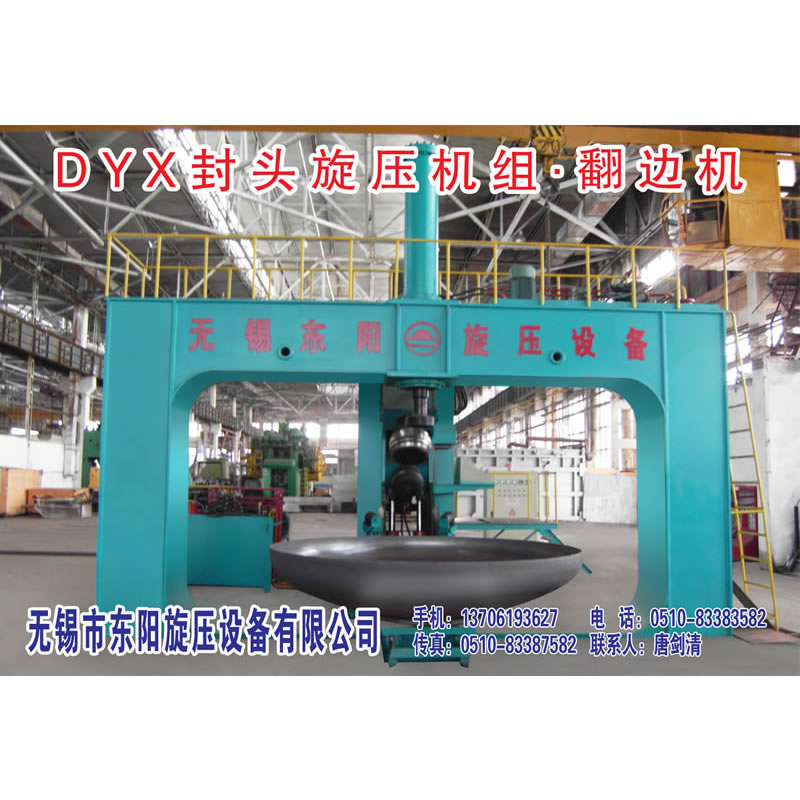
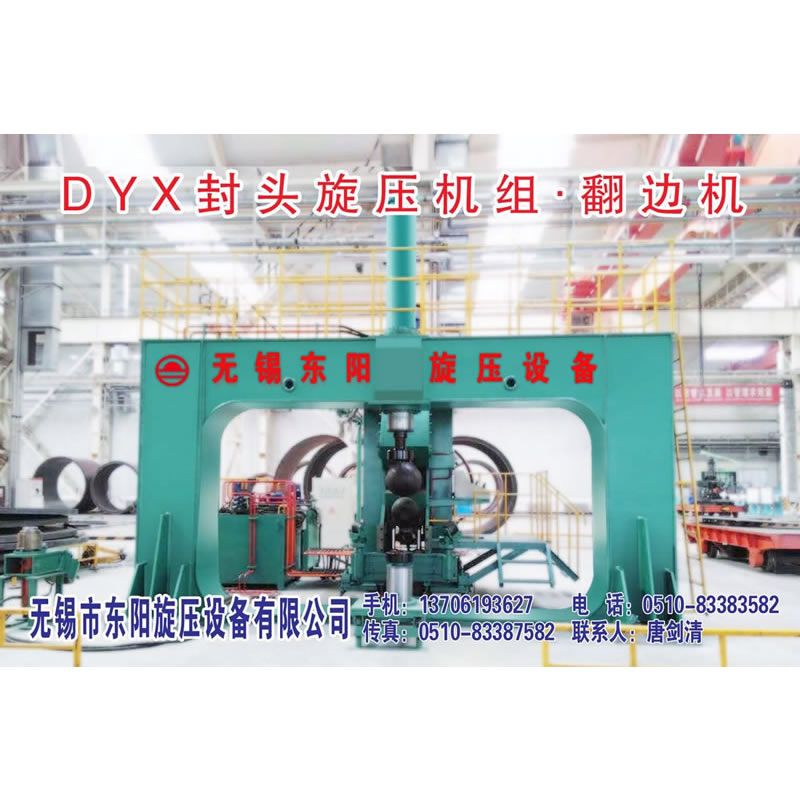
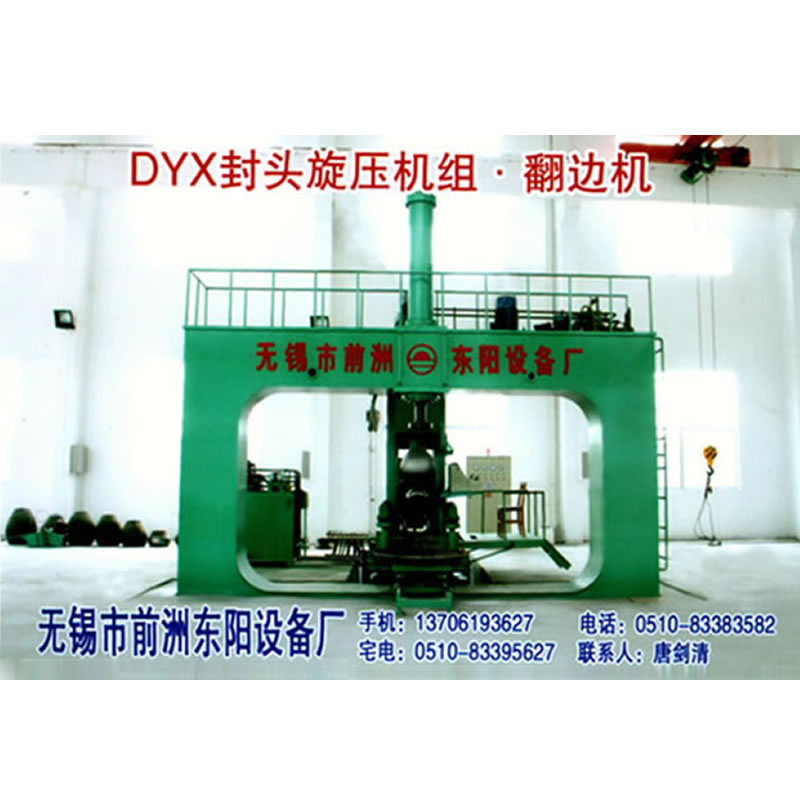
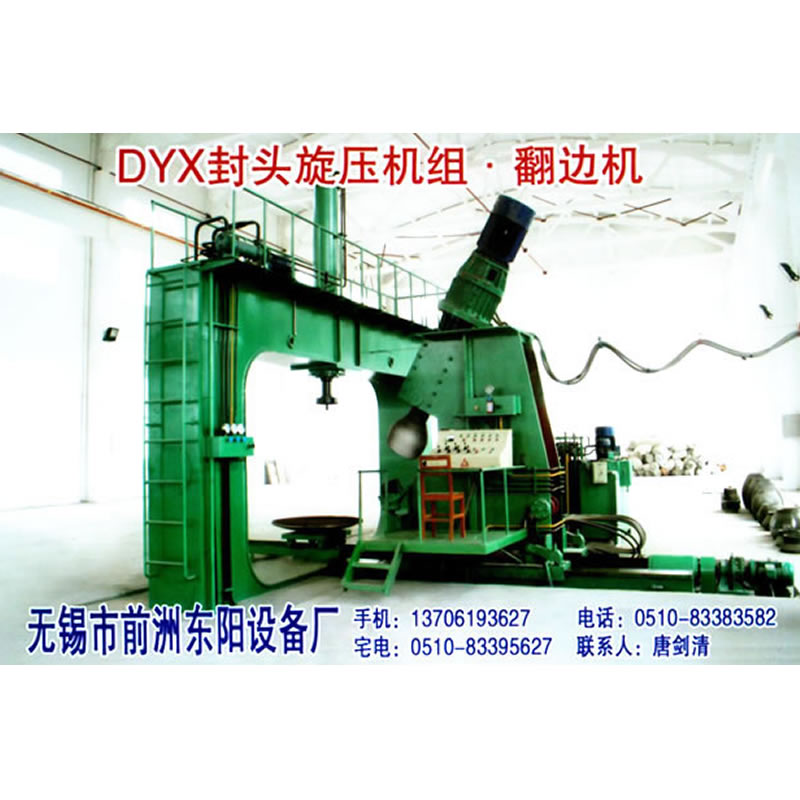
West German‑style T‑shaped Head Flanging Machine
Product Overview
The West German‑style T‑shaped head flanging machine is a specialized spinning equipment designed specifically for processing small and medium‑sized heads. It serves as a core component of the head spinning unit and, when used in conjunction with a forming drum and an edge‑trimming machine, can complete the entire head‑processing workflow. Relying on its West German‑style T‑shaped structure, this machine ensures smooth and natural spinning operations, effectively preventing the head from deviating from the center during processing. With a wide range of compatible head specifications, it fully meets the high‑precision processing needs of small and medium‑sized heads, making it a key auxiliary device for industries such as oil tanks, pressure vessels, and chemical equipment.
Equipment Selection Logic
To address the processing requirements of different head sizes, we have developed a clear equipment selection strategy: For small and medium‑sized head spinning tasks, we recommend equipment featuring the West German‑style T‑shaped structure, which, thanks to its agile operation, delivers convenient and efficient spinning; for large‑size head spinning, we suggest equipment with the Italian‑style I‑shaped structure, whose stable performance ensures reliable processing of oversized heads. By precisely matching equipment types to head specifications, we maximize the strengths of each structural design, helping users produce higher‑quality, more rational, and more competitive head products.
Core Performance Advantages
1. Outstanding Surface Quality: The finished heads produced by this equipment feature smooth surfaces with extremely shallow spinning wheel marks, significantly reducing subsequent grinding work and lowering labor and time costs while enhancing the overall aesthetic appeal of the heads, thus meeting the appearance requirements of high‑end equipment.
2. Precise Dimensional Accuracy: The curved surface contours of the processed heads exhibit high precision, with excellent consistency between straight edges and arcs, ensuring strict compliance with various equipment assembly standards and avoiding assembly issues caused by dimensional deviations, thereby safeguarding the overall performance stability of downstream equipment.
3. Controllable Wall Thickness: During the spinning process, the sheet metal flows evenly and smoothly, resulting in minimal thinning that remains within a controllable range, effectively preventing localized over‑thinning defects and ensuring the structural strength and service life of the heads, thus meeting the stringent safety requirements of pressure vessels, aerospace equipment, and other applications.
4. High Production Efficiency: This equipment boasts excellent continuous production stability and outstanding capacity, accommodating flexible production needs ranging from small batches to large volumes, enabling users to respond agilely to orders of varying scales and improving overall production pace and delivery efficiency.
5. Broad Process Compatibility: It can process a variety of commonly used metal sheets, including carbon steel, stainless steel, and aluminum alloy, catering to material‑processing demands across multiple sectors such as aerospace, pressure vessels, storage and transportation, and chemical engineering, providing multi‑industry users with a one‑stop solution for head processing.
Target Customer Base
The primary target customers for this equipment are overseas mechanical equipment manufacturers, including oil tank producers, pressure vessel makers, chemical equipment manufacturers, pharmaceutical equipment R&D firms, brewing equipment suppliers, steel mill processors, forging equipment vendors, shipbuilders, aerospace equipment manufacturers, nuclear power equipment suppliers, and cosmetic equipment manufacturers, providing them with high‑precision, high‑efficiency small and medium‑sized head processing equipment support.
Application Scenarios
The West German‑style T‑shaped head flanging machine finds extensive application in small and medium‑sized head processing across numerous industries: In the oil tank manufacturing sector, it processes sealing heads for tank tops, ensuring both airtightness and structural integrity; in the pressure vessel field, it produces head components tailored for various pressure‑resistant containers, meeting structural safety requirements under pressurized conditions; in the chemical equipment domain, it fabricates corrosion‑resistant heads suitable for complex media encountered in chemical production; in the pharmaceutical equipment sector, it creates smooth heads compliant with hygiene standards, guaranteeing a clean environment for drug manufacturing; in the brewing equipment industry, it processes heads for storage tanks, ensuring the airtightness and stability of stored beverages; in the aerospace field, it produces high‑precision metal heads that meet the stringent accuracy and strength requirements of aerospace components; additionally, it can be employed in steel mills, forging facilities, shipbuilding, nuclear power, cosmetic equipment, and other sectors for head processing, providing essential component support for equipment manufacturing across industries.
Solutions to Industry Pain Points
1. Addressing the challenges of traditional head spinning equipment—difficulty in pulling the spin and frequent deviation from the center: The West German‑style T‑shaped structure makes spinning operations smoother and more natural, effectively preventing the head from drifting off center and improving processing accuracy and product pass rates.
2. Alleviating poor surface quality and excessive grinding workload: The finished heads produced by this equipment feature smooth surfaces with minimal wheel marks, reducing the need for post‑processing grinding and lowering production costs and cycle times.
3. Avoiding insufficient dimensional accuracy and poor forming consistency: Precise curved surface contours and consistent forming ensure perfect compatibility between the head and downstream equipment, minimizing rework due to assembly issues.
4. Solving problems of inadequate plate thickness control and susceptibility to localized over‑thinning: A uniform sheet metal flow design keeps head thinning within a controllable range, safeguarding component structural strength and preventing safety hazards.
5. Tackling the challenge of single‑purpose material processing across multiple industries: With broad compatibility for various common metal sheets, it adapts to diverse production needs without requiring separate specialized equipment for different materials, thereby reducing users’ capital investment in equipment.
Common Questions FAQ
Q1: What size heads is the West German‑style T‑shaped head flanging machine suitable for?
A: This equipment is specifically designed for small and medium‑sized heads and, thanks to its agile operation, can efficiently handle spinning and flanging tasks within this size range.
Q2: Which materials can this equipment process?
A: With broad process compatibility, it can handle carbon steel, stainless steel, aluminum alloy, and other commonly used metal sheets, meeting material‑processing needs across aerospace, pressure vessels, chemical engineering, and other fields.
Q3: How does the West German‑style T‑shaped structure differ from the Italian‑style I‑shaped structure?
A: Equipment with the West German‑style T‑shaped structure offers smoother, more natural spinning, reducing the likelihood of the head drifting off center, making it better suited for the nimble processing of small and medium‑sized heads; whereas equipment with the Italian‑style I‑shaped structure provides steadier spinning, ideal for larger‑size head processing.
Q4: What production efficiency gains can be achieved by using this equipment to process heads?
A: With excellent continuous production stability and higher capacity, it accommodates flexible production needs ranging from small batches to large volumes, effectively boosting overall production speed and order‑delivery efficiency.
Q5: What dimensional advantages do the finished heads processed by this equipment offer?
A: The curved surface contours of the processed heads are highly precise, with excellent consistency between straight edges and arcs, ensuring strict compliance with various equipment assembly standards and preventing assembly issues caused by dimensional deviations.
Tel:+86-13706193627
Address:No. 8 Xinyuan Road, Industrial Park, Qianzhou Subdistrict, Huishan District, Wuxi City, Jiangsu Province

Contact Us


